What Else to Eat in Naples
Not sure which class to book?They are more different than the listings make them look. The cheapest bakes your pizza in a domestic electric oven, the most booked one uses a wood-fired oven, and one of them is a calzone class that never makes a round pizza at all. All of them cancel free up to 24 hours ahead, so the booking is the low-risk part — choosing is the part worth five minutes.
Compare what each one includesThe Marinara contains no seafood
This is the single most useful thing to know before you order. Marinara means sailors’ pizza, from marinaro, a sailor. Under the EU specification it is 70 to 100 grams of crushed peeled tomatoes, salt, oregano, sliced garlic and a little extra virgin olive oil. No cheese and no fish. It is dated to around 1735, and 1734 in the EU regulation itself — though the sailors story rests predominantly on oral retelling rather than documented evidence, so take the name more seriously than the legend.
The Margherita is the other protected one: tomato, 80 to 100 grams of Mozzarella di Bufala Campana PDO in strips, basil, oil. A third permitted garnish uses fiordilatte, the cow’s milk mozzarella, instead of the buffalo. Those two names are not interchangeable and a good menu will say which it is using. The rest of the specification is on what officially makes a pizza Neapolitan.
Two shapes and a fold
A pizza a ruota di carro, a cartwheel, is the oversized thin one that hangs off the plate: the excess is all in the diameter. You will see confident numbers for how wide one gets; I could not verify any of them, so there is no figure here. A pizza canotto, a dinghy, is the modern opposite — a very high inflated cornicione with less topping in the middle. And a portafoglio is a pizza folded into quarters and eaten walking, which is what Bill Clinton was handed at a counter on Via dei Tribunali in 1994.
The sweet half, which most classes include
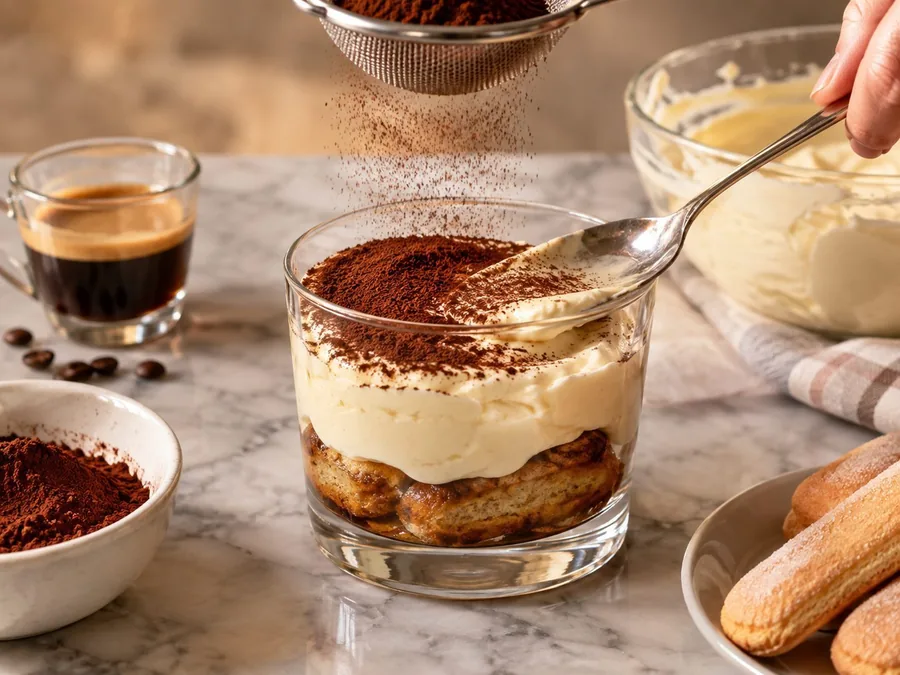
Five of the nine classes on this site end with tiramisù, one with artisanal gelato and one with a sweet calzone made from the same dough as the savoury one. One of them serves limoncello alongside the tiramisù, and another finishes with limoncello after the meal. If the dessert is the part you are actually booking for, those classes are gathered on the classes with a dessert.
Is it rude not to finish your plate in Italy?
Not rude. Noticed. A Neapolitan pizza is served whole and it is larger than most visitors expect, and nobody will be offended if you leave the last of the rim. What people do here, and what I would do, is fold it: the specification requires the finished pizza to be tender, elastic and easily foldable into four, and folding it into quarters makes a thirty-five centimetre disc into something you can finish. Cutlery is normal in a sit-down pizzeria and hands are normal at a counter. Nobody is keeping score.
The thing that genuinely reads as rude is asking for a Neapolitan pizza to be cooked longer because the middle is soft. The centre is meant to be about 0.4 centimetres thick under the EU specification, and no more than 0.25 under AVPN’s separate document. It is soft by design.
What a pizza costs, and the tap water
The Indice Pizza Margherita presented on 17 January 2026 puts the average Margherita in Naples at €6.74 against €7.04 nationally. Di Matteo’s margheritas are reported between €5 and €9 and Da Michele’s marinara and margherita at €4; Sorbillo publishes no prices, so the €7 figure that circulates for it is not something I will repeat as fact. For scale, Italy has over 50,000 pizzerias, a sector worth about €15 billion, turning out more than eight million pizzas a day.
Drink the tap water. ABC Napoli, the municipal utility, stated on 3 February 2025 that the supply comes from among the purest sources in Italy and that it checks more than 130,000 parameters a year, roughly triple the legal minimum. On PFAS it reported 6.3 nanograms per litre, more than fifteen times below the 100 ng/l limit in force from 12 January 2026. Ordering bottled water in Naples is a habit, not a precaution.
Order a Marinara once, even if you always order a Margherita. It is half of what the EU protects, it costs less, and it is the clearest taste of what the dough and the oven are doing without cheese covering them.
Frequently asked questions
What is a must eat in Naples?
The two pizzas the EU specification protects: the Marinara, with tomato, garlic, oregano and oil and no cheese at all, and the Margherita with Mozzarella di Bufala Campana PDO. Then a portafoglio at a counter, folded into four and eaten in your hand.
Does pizza marinara have seafood in it?
None. The name comes from marinaro, sailor, not from fish. Under the EU specification it is crushed peeled tomatoes, salt, oregano, sliced garlic and extra virgin olive oil. Where the famous names sit on all this is on the celebrity pizzerias.
Is it rude to not finish your plate in Italy?
No. A Neapolitan pizza is bigger than most visitors expect and leaving some rim offends nobody. Folding it into four, which the specification requires it to allow, is how people here finish one. Asking for it to be baked longer because the middle is soft goes down worse.