The Complete Naples Pizza Guide
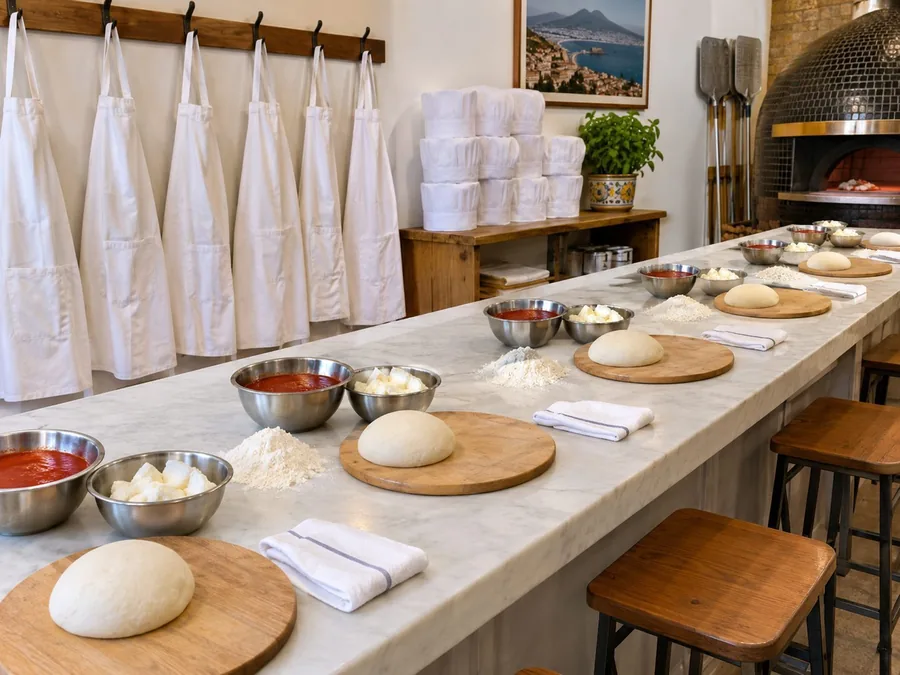
I spent six years front-of-house in a pizzeria on Via dei Tribunali, which mostly means six years of watching visitors come back from a pizza class with an apron in a paper bag. Most of them were pleased. The ones who were not had all made the same mistake, and it was never about the money.
Not sure which class to book?They are more different than the listings make them look. The cheapest bakes your pizza in a domestic electric oven, the most booked one uses a wood-fired oven, and one of them is a calzone class that never makes a round pizza at all. All of them cancel free up to 24 hours ahead, so the booking is the low-risk part — choosing is the part worth five minutes.
Compare what each one includesThe oven is the whole argument
Nine classes, all sold as authentic Neapolitan pizza, all two to three hours, all ending with you eating what you made. The cheapest is €13. Two of them share the top price at €69. Nothing in the photographs explains a five-fold gap; they are all of the same three things: a bench, some flour, a fire.
The fact that explains most of it is which oven your pizza goes into, and no listing puts that at the top. The €13 class bakes in a domestic electric oven with a ruoto napoletano, a round steel home pan. Sneering at that would be wrong: it is how you will actually cook once you are home with an ordinary oven. But it is not the wood-fired oven the pictures suggest, and the disclosure sits nine paragraphs down the listing. The €21 class, the most-booked on this site at 4.9 from 6,382 reviews, uses a wood-fired oven, caps the group at twelve and gives every guest an apron and a chef’s hat. Read those two sentences again and you have the pricing of the whole category: cheap does not mean electric. Four of the nine name a wood-fired oven and a fifth calls it a traditional Neapolitan one; one names a domestic electric one; three do not say at all, which is its own kind of answer. The wood-fired classes are listed separately.
The cheapest wood oven after the €21 is the newest class on the list, €49 with the group capped at ten, and I have to be careful with that one. It is rated 3.9 from 32 ratings — the lowest score here — while every one of the ten reviews GetYourGuide shows is five stars. The ratings dragging the average down are real and they are not readable, so I am not going to invent a reason for them. A 3.9 you cannot read the complaints for is a different proposition from a 3.9 you can.
What the two or three hours actually contains
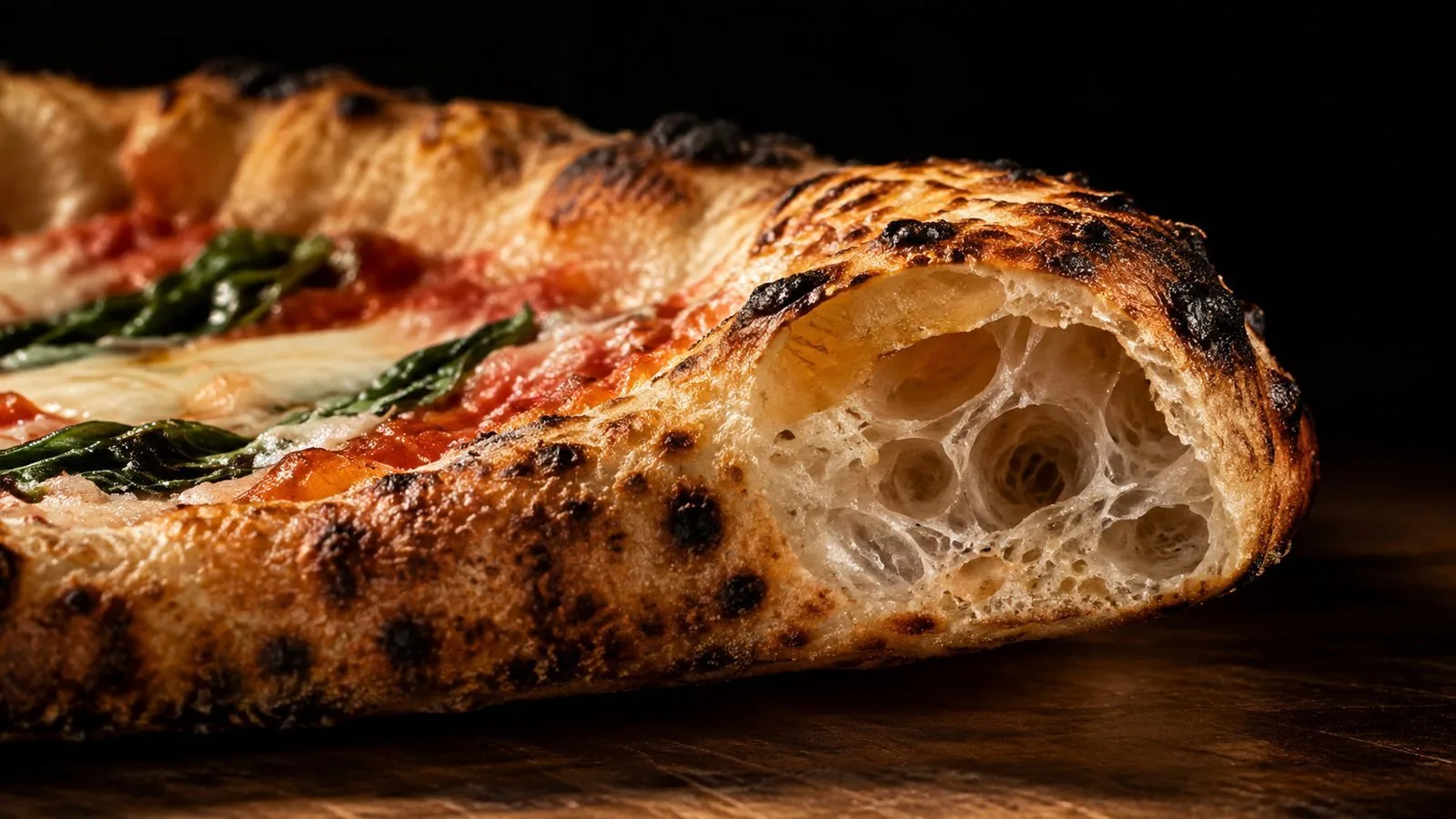
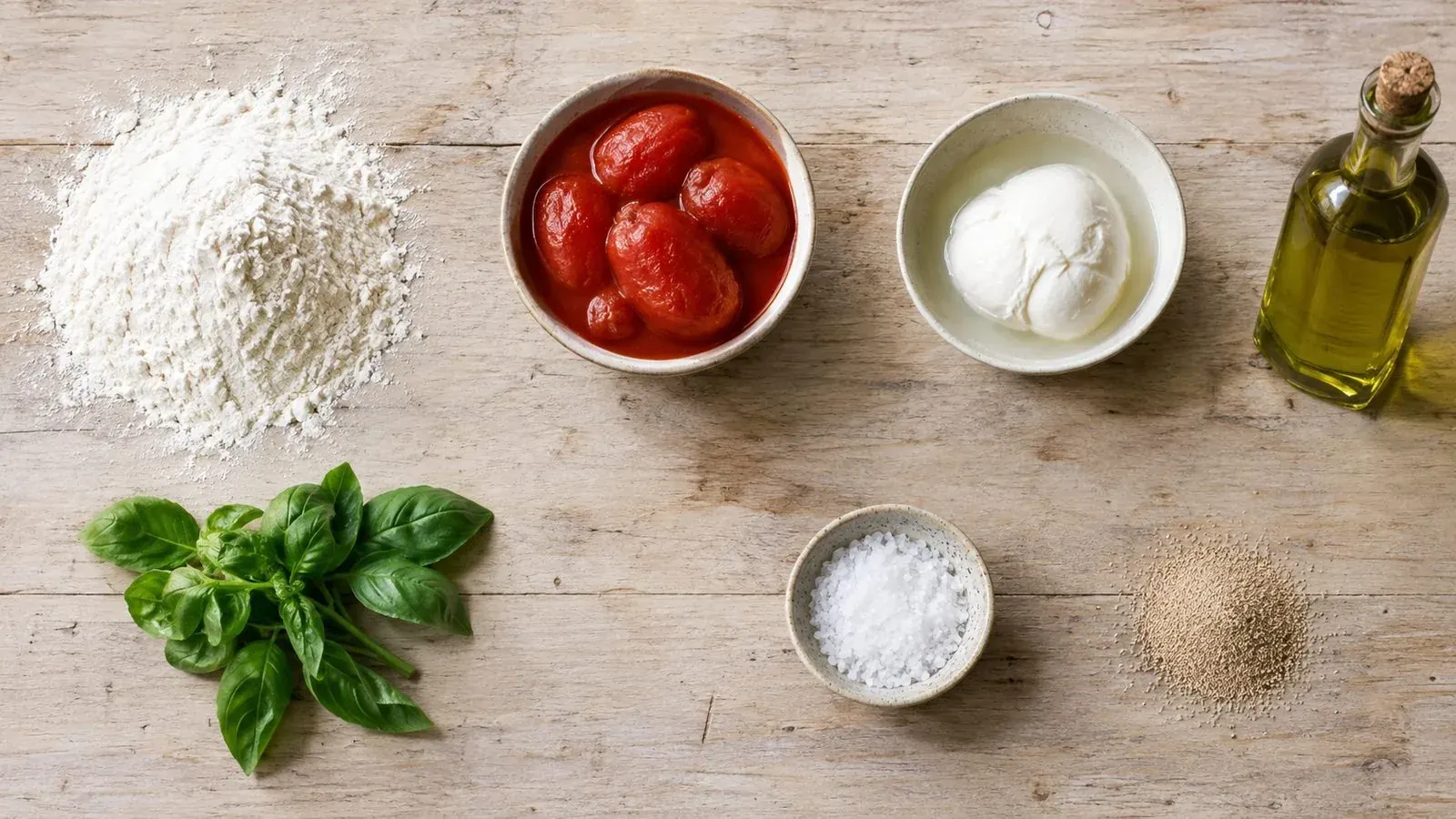
Less than people expect, and that is not a complaint. You are handed an apron. You build a dough out of four things — water, flour, salt, yeast — and somebody shows you how to divide the mass into panetti: the flagship teaches the mozzatura, the calzone class the staglio. The dough rests. You stretch it from the centre with your fingers, never with a rolling pin. Tomato goes on, San Marzano on three of the nine, then mozzarella, then basil, then the oven, then you eat it. Five of the nine add tiramisù, which on the flagship is made first and left to chill while the pizza is made.
The variations are the part worth choosing on. On the €25 class you slide your own pizza in with the peel, and the class is built around that moment. One of the nine never makes a round pizza at all: a calzone class in a working pizzeria, one workstation per person, six and over only. One makes artisanal gelato alongside the pizza and is the only class described as suitable for children. Of the two at €69, one gives every participant a bench of their own and the other pours wine with the tiramisù. Both run in English only, and so does a third. Which language each class runs in is shorter than it ought to need to be, and what actually happens walks the nine steps in order.
What you take home, honestly
A recipe, on most of them. A fair idea of how a properly wet dough should feel under your hands, which is the one thing a video cannot pass on. A meal. And a photograph of yourself in a paper hat, which is worth more than it sounds.
What you do not take home is the ability to make pizza. You take home the ability to make one pizza, supervised, with somebody else’s proved dough and somebody else’s lit oven. Two or three hours is a demonstration you take part in; a professional course runs on a completely different scale. Several of these classes hand out a certificate and I would treat it as the souvenir it is. The best line in the whole review set belongs to David, on the €69 own-bench class: he came out knowing that his dough was about 60% water and that the chefs’ dough was wetter than his. One real technical fact you did not walk in with is what a good class gives you, and it is not a trade. The rules that separate a Neapolitan pizza from a round bread with tomato on it are on the STG page, not in an afternoon.
Who should skip it
Anyone with coeliac disease or a serious allergy should read the exclusions first: the cheapest class states plainly that it is not suitable for coeliacs, and two others ask to be told in advance. Anyone travelling with a child under six should cross the calzone class off — six and over, work area included. Anyone who needs step-free access should know that the flagship is not wheelchair accessible. And anyone on a tight schedule should know that two reviewers of the gelato class said it ran about an hour over. How long a class takes has the per-class timings; the age rules differ from class to class.
The one reason I would not skip it is the commonest one: I already know how to make pizza. Sandra had made it before and wrote that she still learned something new, which matches six years of watching people come back.
If you have two days in Naples
Book the €21 class, in the morning, on your first full day. Morning, because you finish it full, and that ruins lunch rather than dinner. First day, because if it overruns you have not stacked the rest of the trip on top of it. That class, because €21 buys the wood-fired oven, the group capped at twelve and four working languages. Susan called it a very slick operation. If your dates are gone, the €25 class is the same shape with the peel moment and a limoncello at the end. All nine are compared here, the money is here, and whether any of it is worth it is the page where I argue against myself.
Ready to book?
The most booked class in the city is also one of the cheapest, and it uses a wood-fired oven. If you would rather weigh them up first, the full comparison of all nine and the breakdown of what each price buys are the two pages to read.
Frequently asked questions
How long does a pizza-making class in Naples take?
Two to three hours for every class compared here. The listed durations run from two hours to three, and two reviewers on the gelato class reported it running about an hour over. The per-class timings are here.
Do I need any cooking experience?
No. None of these classes assume any, and one states explicitly that no prior experience is required. What they teach is a single sequence you repeat once — see what actually happens, step by step.
Will the class be in my language?
It depends on the class. Four of the nine list Italian, French, Spanish and English; three are English only, one runs in English and Italian, and one warns it may run bilingually. The per-class language list is here.